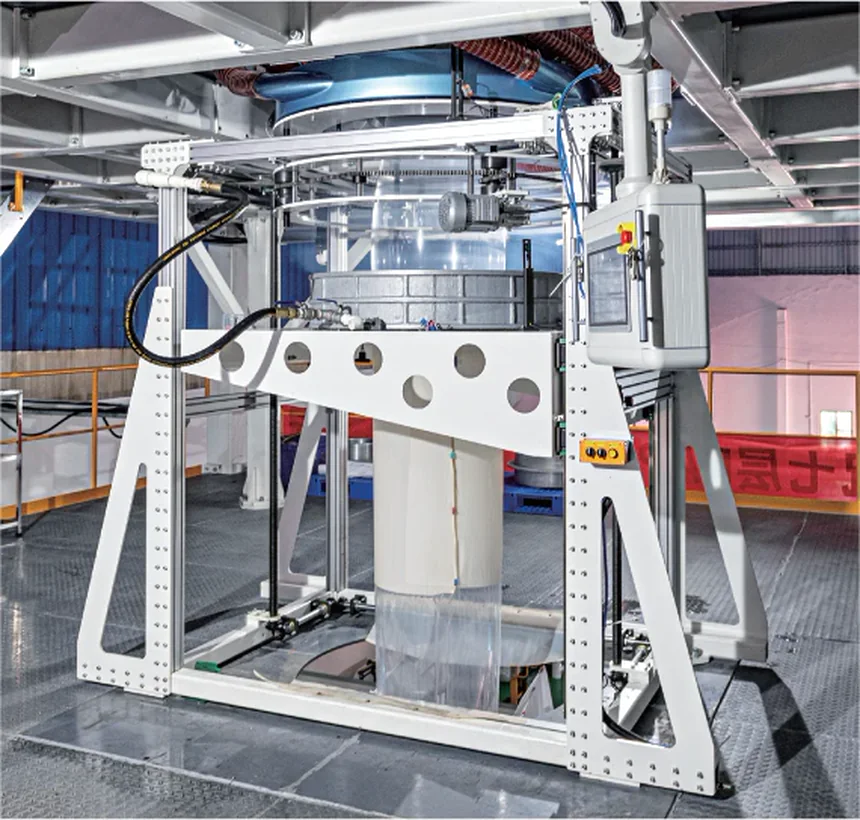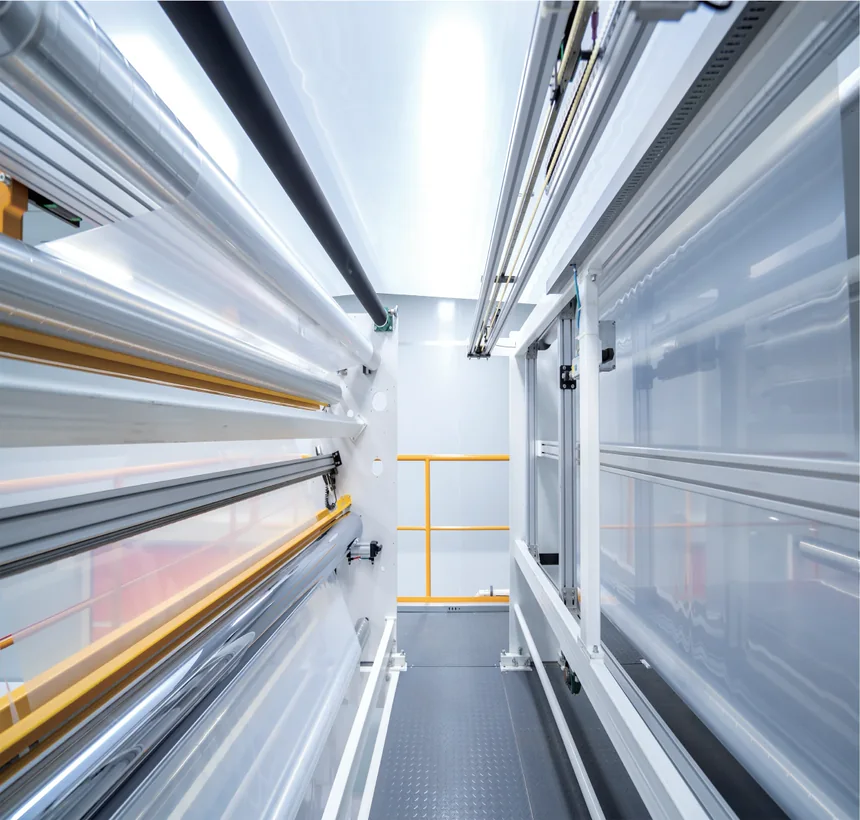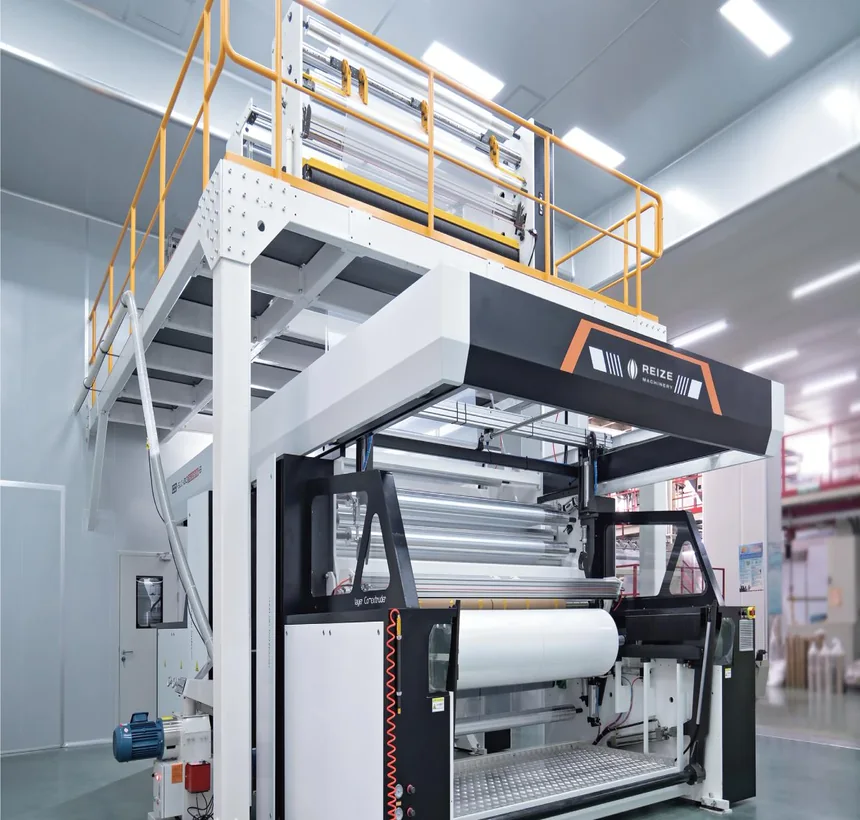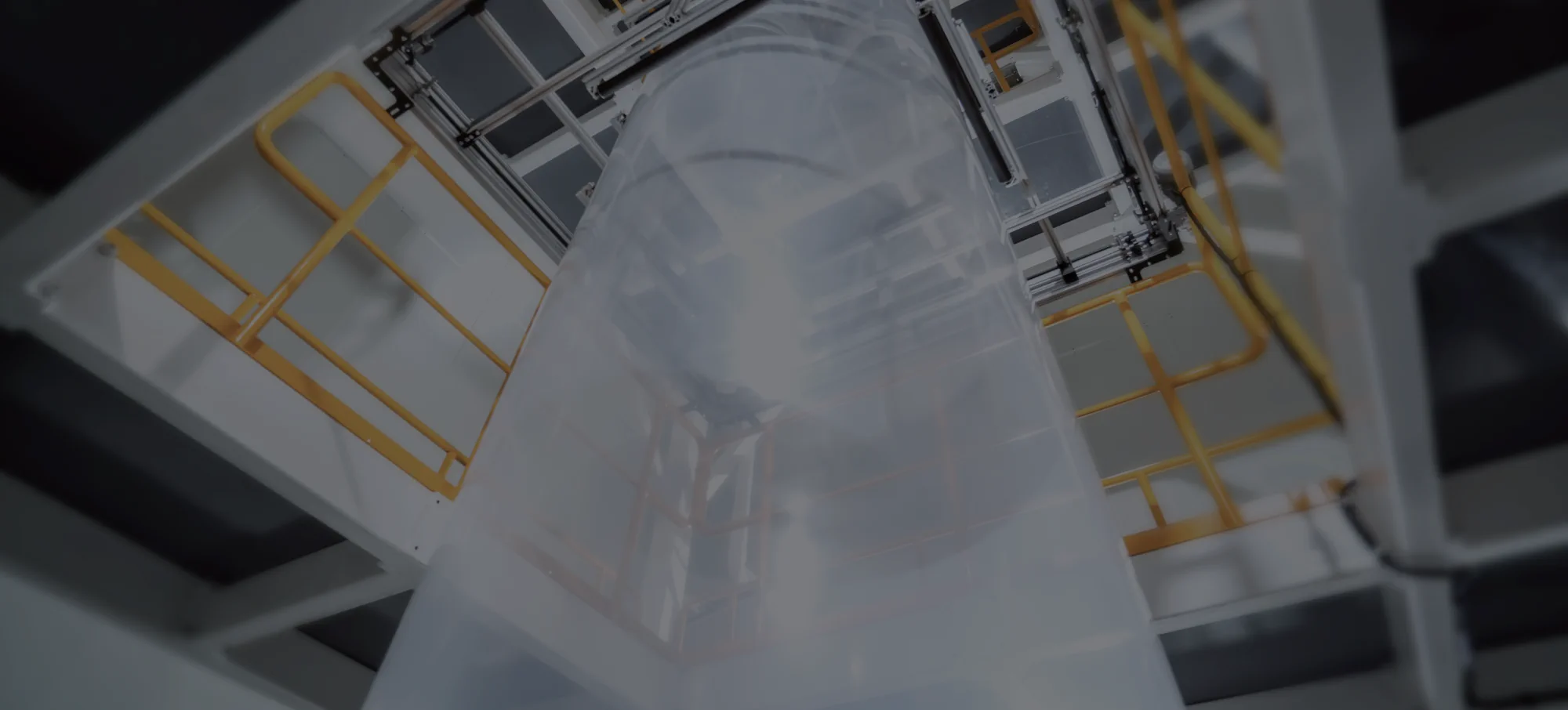
Film bubble rising between the platform rails of a blown film line, seen from below
Cases

This is where we show them to you.

Some are in production, some under test — either way, they are built to create value for you.

Imported automatic air ring — a gauge that holds

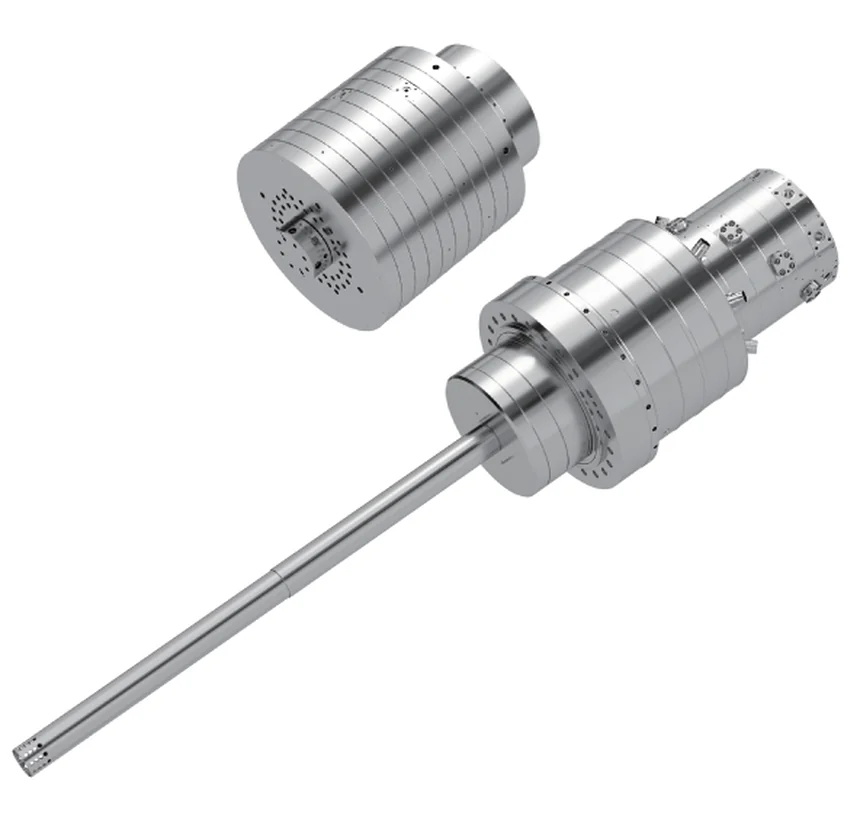
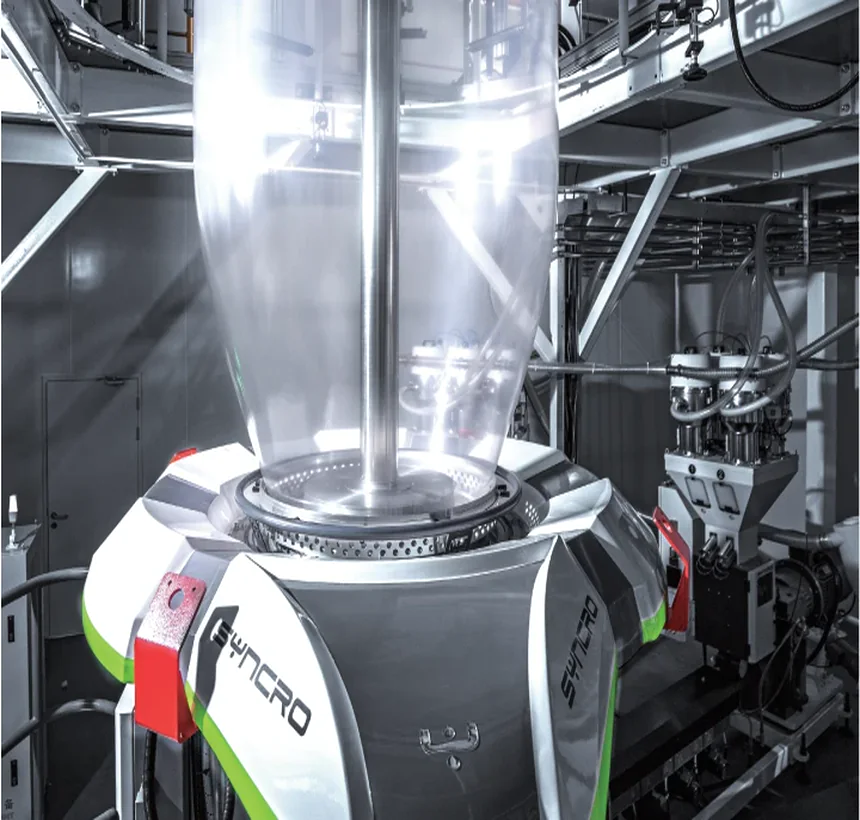
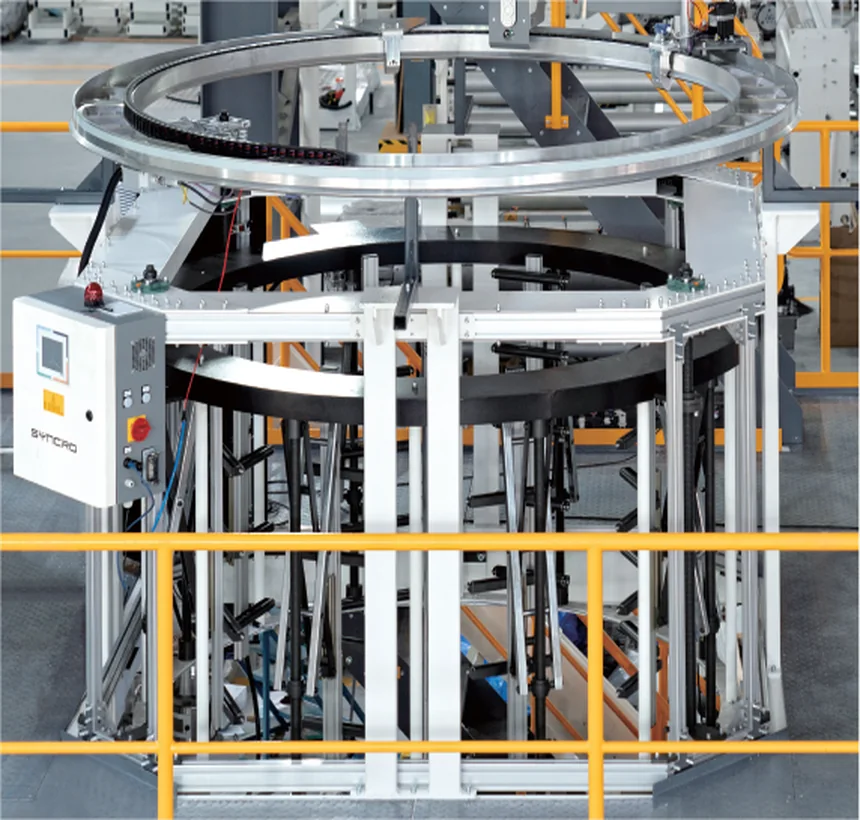
At the customer’s plant the gauge never held, so every roll was blown heavy just to bring the thinnest point into spec — a good share of every tonne of resin wasted. We supplied them a blown film line with the imported fully automatic air ring. The ring is imported: the supplier has been with us for more than ten years, a long-term partner, so the part can be relied on. Fitted on the machine, it controls the air pressure and the temperature, and the film gauge stays constant. Once the gauge holds, what you save per tonne is profit.
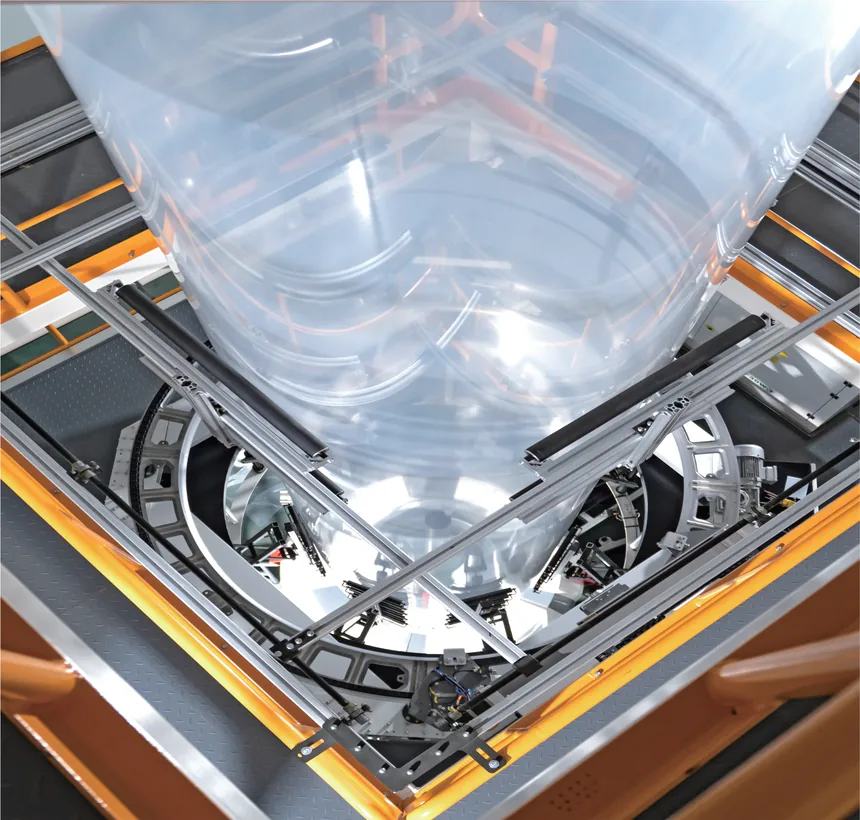
IBC cooling, changeovers in minutes

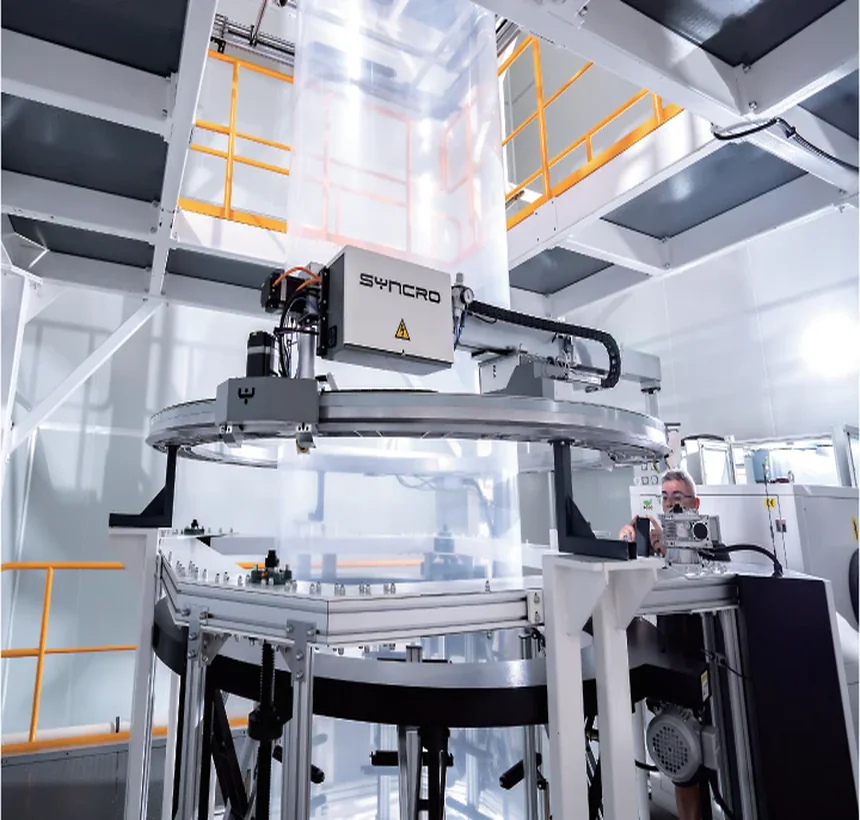
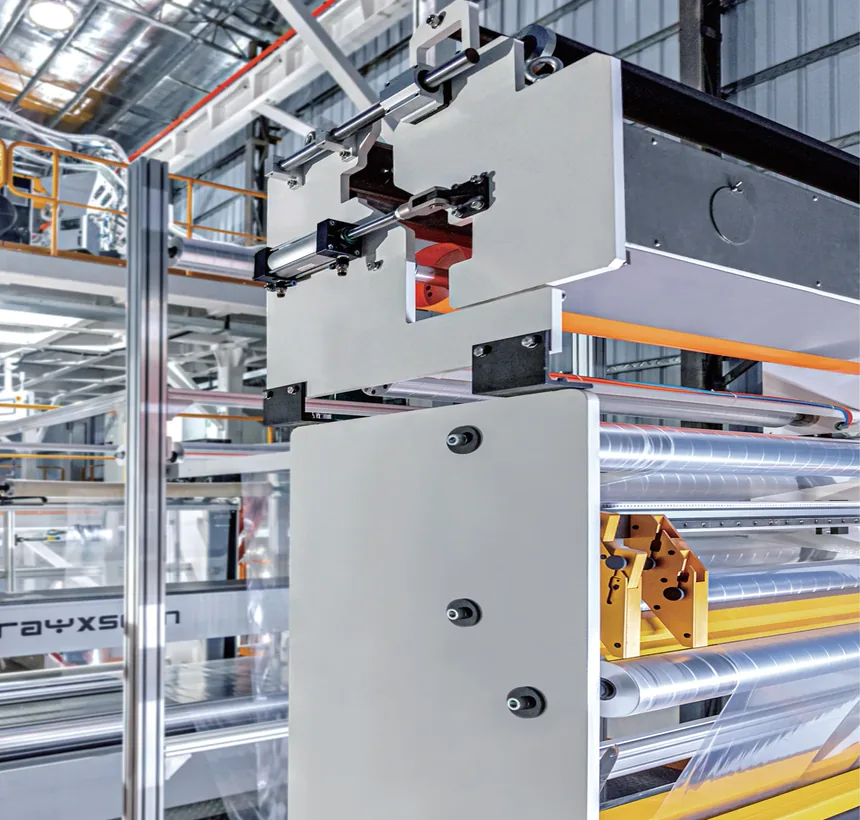
This customer’s orders come in small lots, with several size changes a day. A change used to mean someone standing at the bubble working the lay-flat width out by trial, and the trial film never reached the warehouse — it was scrap. Push the line speed and the bubble would not hold, so the line ran slow. The machine carries our own IBC internal cooling control: it governs the cooling inside the bubble and corrects in milliseconds, and it keeps up however awkward the schedule. Gauge tolerance is now very small and every roll matches; a size change takes minutes, changeover scrap is largely gone, and the minutes saved turn straight into output.

Fully automatic twin winder — no downtime

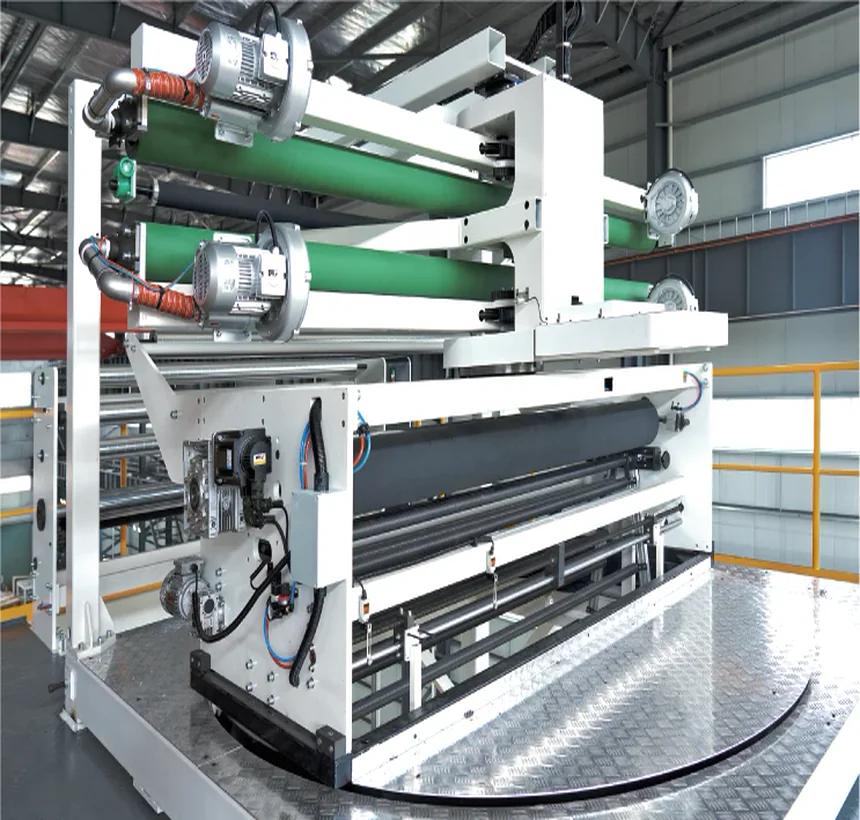
At the customer’s plant winding was manual: a roll change stopped the line, the film was cut and spliced by hand and a bad splice wrote off the roll; a full 200 kg roll was lifted by hand; and one winder could not take both thin and thick film. We supplied our own fully automatic centre-surface twin winder. Three winding modes switch with the film; automatic tension control tracks and adjusts tension for different film processes and gives a flat roll; cutting, roll change and unloading are automated, with hydraulic unloading. Roll changes no longer stop the line, scrap is down, and one operator does the work of two.

One integrated solution for a modern plant

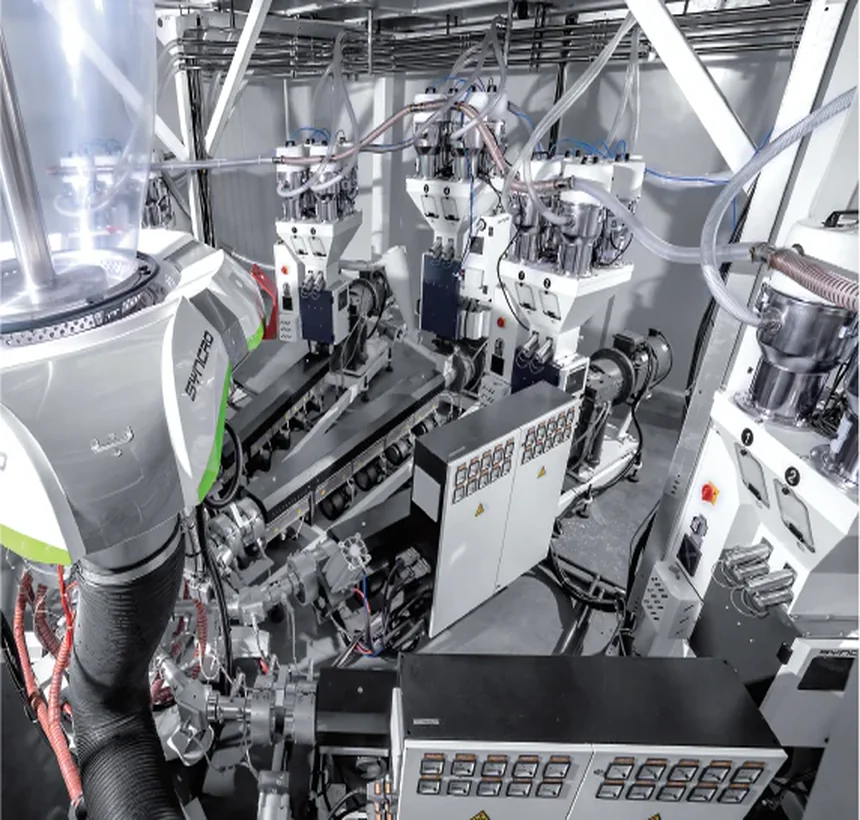
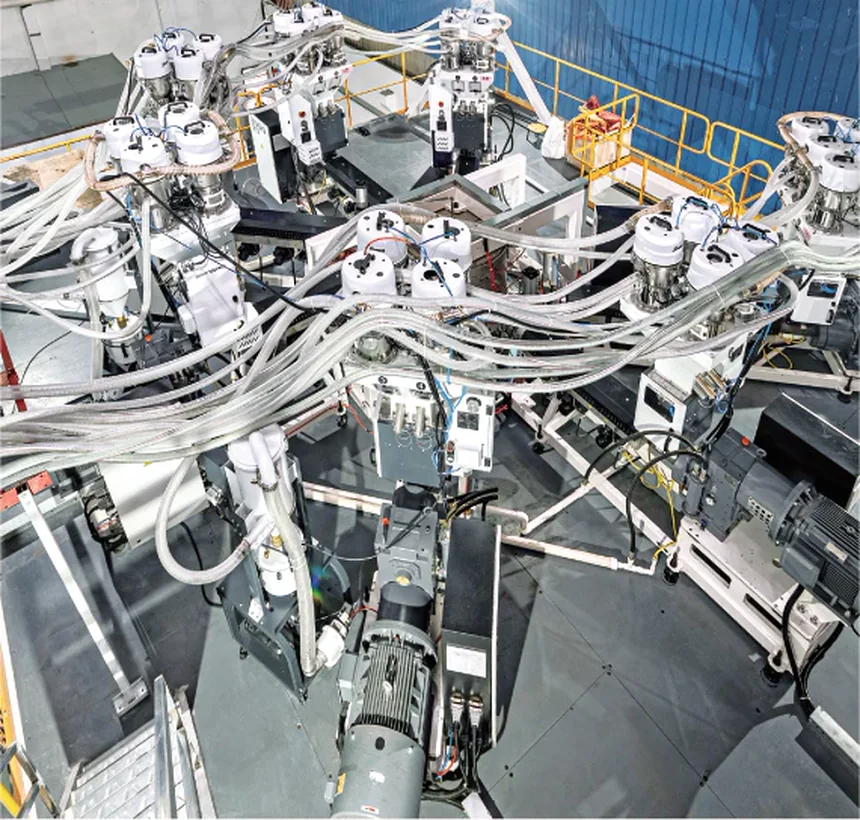
Blown film equipment is moving to the high end: smarter, more automated, more efficient. Machine stability and energy use are where the competition sits, and service response and build-to-spec decide who wins the order. Demand grows fastest in multilayer co-extrusion and degradable material, with PBAT and PLA capacity expanding; downstream, beyond packaging and agricultural film, battery separator and PV backsheet film pull high-end demand. The plastics machinery market is about 85 billion yuan, hollow forming around 18 per cent, growing 6–8 per cent a year. We build one integrated scheme: work out what film and how much a year, then configure the equipment. The whole line comes from one maker, so the machines need not accommodate each other; installation, commissioning, trial production and spares are followed through.

Central computer control, quicker setup

The line runs from one touchscreen computer control, software written in house, Schneider automation throughout; a Schneider CANopen bus links the inverters and servo drives, so control is reliable and response immediate. Haul-off and winders run on servo motors for precise control. Melt temperature, screw speed, melt pressure, IBC internal cooling, the external air ring, bubble stabilising, rotating haul-off, line speed, tension and winding are all set and watched on the one screen, with alarms and self-diagnosis. Process settings are stored per film, so the next run starts from the conditions you had. Three PLCs — extruder and haul-off, plus one per winder — mean a winder fault does not stop the line. Interfaces are open: air rings and hoppers from Plast-Control or Syncro connect straight in.